HEYOKAH ANGUS
Family, Farming and the Meaning of Heyokah Angus
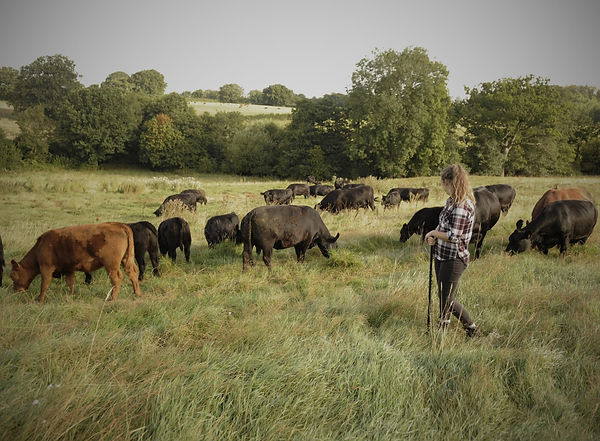
The Aberdeen Angus herd at New House Farm have been shaped by the influence of multiple people, places and history. They are cattle bred for function, resilience and calm temperaments, rooted in native Angus bloodlines but required to work within a new entrants modern farm tenancy business.
The name Heyokah Angus sits at the heart of both a family story and my cattle herd.
Heyokah was the name of my grandparents’ community centre in Swansea, the Heyokah Centre, a place built on connection and shared values. It was a space where people came together, shared knowledge, and looked out for one another. Choosing this name as my herd prefix felt right.
In my opinion, a herd prefix is more than an identifier in a cattle herd book. It becomes attached to generations of cattle, breeding decisions made over decades, and reputation built quietly over time. By using Heyokah, I wanted the cattle themselves to carry something of my family’s story and that a herd can exist because of people and values, not just land ownership.
Although I did not grow up on a farm, farming and land management do run through my family history, and those influences feed directly into what Heyokah Angus represents. I'm incredibly lucky to also have the support of skills within my close family which are critical in running a business nowadays.
My Grandad, Leighton, was born in Wales and then moved to Canada, where he met my Grama. They farmed in Canada before returning to Wales, settling on Uncle Alwyn’s farm, where they raised their family.
My other granddad, David, dedicated much of his time as a key volunteer for the National Trust in the Peak District, supporting the management of one of the UK’s most iconic landscapes. His work reinforced the idea that land is something to be cared for and can be done so by groups of people working together.


The History of Native Aberdeen Angus
The cattle at Heyokah Angus are rooted in Native Aberdeen Angus genetics, which represent the original foundation of the Aberdeen Angus breed.
Aberdeen Angus cattle developed in north‑eastern Scotland from naturally polled cattle that were prized for their ability to thrive on rough pasture, harsh weather and low inputs (this corner of Monmouthshire is probably too tame for them in all honesty!) These cattle were moderate in size, fertile, long‑lived and efficient.
The first Aberdeen Angus Herd Book, published in 1862, recorded these early bloodlines. For many decades, the breed was selected primarily for function, fertility and beef quality from grass, rather than rapid growth or frame size.
As Angus genetics spread internationally during the 20th century, selection pressures changed. In some regions, particularly where intensive systems dominated, cattle were selected for increased size, faster growth rates which required higher inputs. Imported genetics were introduced back into the UK Angus herds, gradually diluting some of the original native characteristics.
Native Aberdeen Angus cattle are those whose pedigrees remain free from imported bloodlines, tracing back continuously to the early Scottish herd books. These cattle retain the traits that originally defined the breed of moderate frame, easy calving, strong maternal ability and efficiency on forage. The Soutar family at Dunlouise Angus deserve a lot of credit for the work they have done in preserving Native Angus genetics.
Native Angus and Imported Aberdeen Angus
While both Native and imported Aberdeen Angus share the same breed origin, decades of different selection goals have led to clear distinctions.
Native Aberdeen Angus cattle are typically:
-
Moderate in size and frame
-
Highly grass‑efficient
-
Easy calving with smaller birth weights
-
Fertile and long‑lived
-
Calm, maternal and structurally sound
They are particularly well suited to extensive, regenerative and low‑input systems, where cattle must thrive without reliance on concentrate feeding.
By contrast, many imported‑influenced Angus lines have been selected for:
-
Faster early growth
-
Larger mature size
-
Performance in higher‑input or feed‑based systems
These cattle can perform well in the systems they were bred for, but they are not always suited to grass‑only or low‑intervention farming. As we move to a post subsidy era of farming in the UK, I believe the traditional Angus genetics are invaluable to herds.
At Heyokah Angus, I have Native and part‑Native cattle that have been chosen deliberately for their low maintenance functioning. As a new entrant farmer, I have invested capital in cattle, with limited investment going into equipment. A housed cattle system would require a huge amount of investment in machinery, tractors and feeding equipment - which I currently don't have the funds for. I believe that low maintenance hardy breeds of native livestock to the UK can provide great opportunities for new entrants into the industry.
My journey with Aberdeen Angus began not with buying cattle, but with learning the breed.
A major inspiration has been Rob Havard of Phepson Angus, my previous employer, whose approach to cattle breeding and land management showed what is possible when cattle are bred to fit their environment, not the other way around. I have a great deal to thank Rob for, both in genetics and in shaping how I think about cattle and land. When I found out I had been picked for the tenancy at New House Farm, I spent countless hours trawling through the Aberdeen Angus herd book online, identifying bloodlines I recognised, admired and wanted on the farm here. That turned into phone calls and conversations about how the cattle were managed, the environments they lived in, and whether those systems aligned with how I wanted to manage my herd in Monmouthshire.
This led to travel, particularly through Scotland, visiting herds and meeting breeders. Along the way, I was entrusted with pieces of history: 1950s breeding articles, original herd books and magazines, black and white photographs of ‘old-type’ cows.
I have been incredibly fortunate to source cattle from exceptional breeders across the UK. In particular an amazing lady called Sheila Hopkins of Templehouse Angus in Ayrshire who has bred functional Aberdeen Angus cattle for over 50 years, with a key focus on cattle that work - fertile, easy calving and hardy. Her influence runs through the herd here.


In 2024, I took on the tenancy of New House Farm, the cattle arrived in late spring. Becoming a tenant farmer is both a privilege and a responsibility, caring for land a farm that has a great history within the local community.
Management of the herd is kept simple, focusing on pasture establishment, grazing management and observing which cattle work well in the system here.
We will be processing Aberdeen Angus carcasses through our on site butchery to sell direct to consumers, monthly meat subscription sign ups can be found here. We occasionally have breeding bulls and breeding females for sale. So please get in touch to find out more. Straws are available from our bull at stud here.